- Published on
What Are Agent Skills?
- Authors

- Name
- Jai
- @jkntji
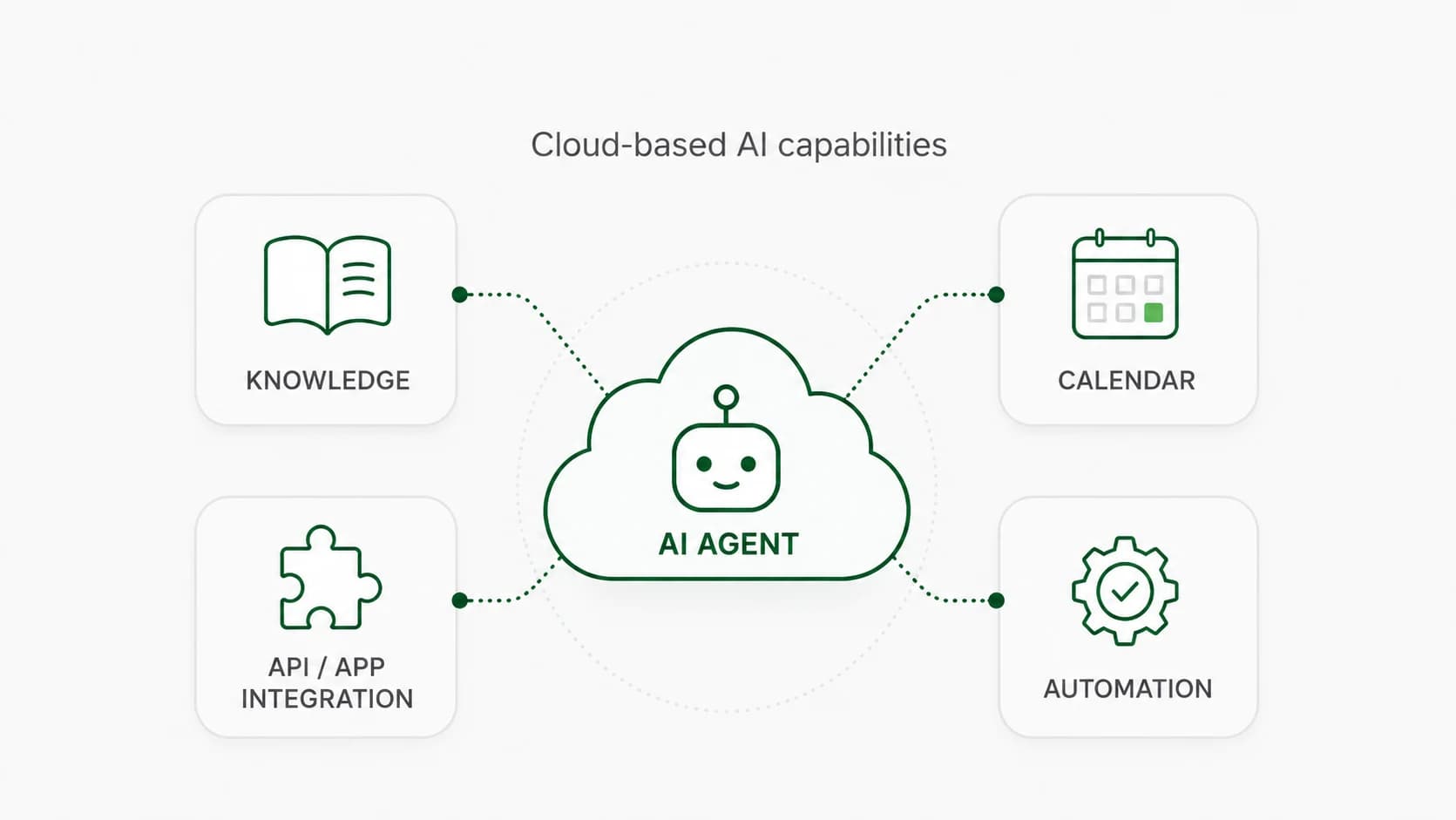
When you create an AI agent, you're not just building something that talks. You're defining what it knows how to do.
In Predictable Dialogs, we call that a skill.
A skill packages the instructions, knowledge, and tools an agent needs to perform a specific kind of work. It turns a conversational interface into something that can actually take action.
A simple way to think about it
Hiring someone for a job usually means giving them three things:
- Clear instructions on how to do the work
- The information they need
- Access to the tools required to get it done
A skill does the same for an AI agent.
It contains the instructions that define the agent's role, plus the tools that let it go beyond generating text. Those tools might include:
- A knowledge base for accurate answers from your company data
- Integrations like Google Calendar
- Your own application APIs (via GET, POST, PUT, PATCH, or DELETE)
The conversation is just the interface. The skill is the capability.
Skills are becoming a standard idea
The concept of modular agent skills isn't unique to us. There's an open specification at AgentSkills.io that defines an Agent Skill as a portable package of instructions and supporting resources (centered on a SKILL.md file).
The core insight is powerful: instead of stuffing everything an agent might ever need into one giant prompt, separate capabilities into focused skills.
Predictable Dialogs takes that idea further by making skills live in the cloud rather than as local folders and files.
Skills in Predictable Dialogs live in the cloud
You configure instructions, connect knowledge, link applications, and set up API actions directly in Predictable Dialogs. The skill becomes part of the agent's cloud configuration.
This matters because our agents are embedded in websites and applications. Creators shouldn't have to manage skill folders or scripts on the machines where agents run. You define what the agent can do; we make those capabilities available wherever the agent is used.
Today: one agent, one skill
Right now the model is deliberately simple:
One agent -> one skill -> many tools
A customer-support agent might combine helpful instructions, company knowledge, and a few API actions for looking up customer data. That works well for many cases.
Predictable Dialogs also makes it easy to create multiple agents. Many teams build separate agents for different jobs - one for product questions, another for orders, another for scheduling. Each has its own focused skill.
The growing need for more
As agents move deeper into applications, users increasingly want one agent that can handle multiple jobs.
A user might say:
- "Explain how this feature works."
- "Show me my invoices."
- "Schedule a call with support."
These require different knowledge and tools. Conceptually they are separate skills. From the user's perspective, though, it should still feel like talking to the same agent.
Next: multiple skills inside one agent
This is where Predictable Dialogs is headed:
One agent -> multiple skills -> different instructions, knowledge, and tools
An agent inside a SaaS product could have a Product Support skill, an Account Management skill, a Scheduling skill, and more. The agent selects the right skill for the request. The user just talks to one consistent agent.
Why skills make agents easier to grow
Modular skills keep capabilities cleanly separated. Instead of continuously expanding one massive configuration, you add focused skills as needs grow.
Each skill answers two clear questions:
- What does this agent know how to do?
- What does it need access to in order to do it?
This structure is especially valuable for agents deeply integrated into software products. Capabilities stay organized, maintainable, and scalable, without forcing users to understand the internal architecture.
Skills turn conversational agents into reliable workers.